

- What We Do

- who we help
- What We Do
- Who we help
Built, Not Generated: Reclaiming the Supply Chain Craft in the Age of AI
Magical realism is a term I hadn’t thought about in a while—but it feels oddly fitting in today’s world, where the line between reality and magic is increasingly blurred, especially with AI.
One of my favorite books is One Hundred Years of Solitude (Cien Años de Soledad) by Gabriel García Márquez, published in 1967. Netflix released a series at the end of last year, marking the first time this legendary story has ever been brought to screen.
It was an incredibly ambitious undertaking (no pressure, Netflix)—not just because the Nobel Prize-winning novel is considered one of the greatest literary works of modern times, but because it gives the perspective of a changing world through the lives of a family in the mythical town of Macondo.
Gabriel García Márquez had long refused to allow a film adaptation, insisting that his novel—where the real and the fantastical converge—could never be faithfully translated onscreen. “Macondo,” he said, “could never be built.”
And yet... here we are.

Macondo, AI, and the Blurred Line Between Magic and Reality
Filmmakers have managed to construct a world that once existed only in the reader’s imagination. Macondo now feels real. Audiences can walk its streets, feel its rhythms, and believe in a place where time bends, ghosts linger, and it can rain for four years straight.
We're seeing something similar with AI.
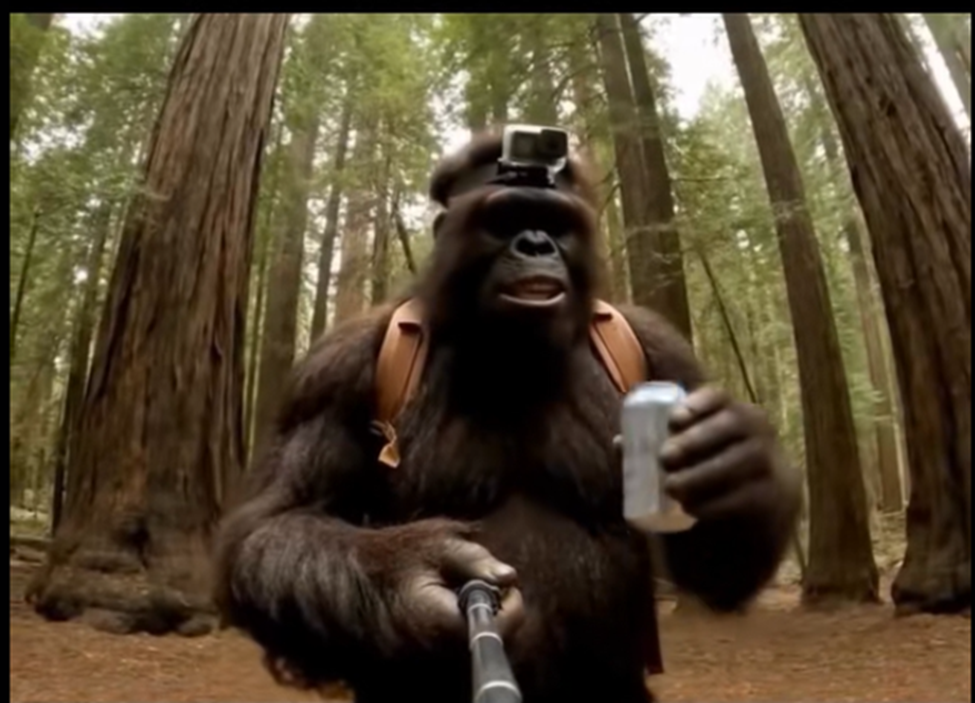
Today, we can now easily generate images, visualizations, and narratives with the click of a button. AI can now automate a startling range of creative tasks. Just scroll through your LinkedIn feed, courtesy of your favorite GenAI platform, for the flood of AI-generated blogs —or viral hits like the AI Monkey Energy Drink video making the rounds.
These tools make creative tasks easier by handling some of the mental work. But if we rely on them too much, they may dull our ability to come up with fresh, original and creative ideas (see EEG study from MIT Media Lab “Your Brain on ChatGPT”, which published a couple of weeks ago). Today's technology has made it easy to create—but it hasn’t necessarily made it easier to be creative. And there’s a big difference between the two.
Creativity isn't the same as creation
Learning to Fail and Unlocking Creativity
Paradoxically, generative tools don’t really let you fail—yet failure is a crucial part of learning any new skill.
Like artists developing their craft through trial and error, creativity doesn’t emerge from instant perfection, but from effort, feedback, and iteration. It’s in the awkward first draft, the lopsided sketch, the off-key note that exploration and originality begin to take shape.
The same holds true in supply chain planning. Traditionally, it has been a craft—shaped through mentorship, refined through experience, and grounded in human judgment. Planners didn’t just follow a system; they read between the lines, adapted to uncertainty, and made judgement calls that many times couldn’t be captured in code. It was tacit knowledge, passed down like an apprenticeship.
Tools—whether spreadsheets, point solutions, or planning platforms—were extensions of the planner’s mind. The value wasn’t in the software alone, but in how skilled minds put it to use.
But what happens when that learning curve disappears entirely?
What Makes This AI Wave Different
It’s tempting—and even a bit comforting—to compare today’s wave of AI disruption to previous technological shifts: the printing press, the industrial revolution, the rise of the internet, or the introduction of new creative tools for graphic design and audio production. But what sets this wave apart, I believe, is that it enables complete novices to create production-ready work without ever learning the craft that once made it possible.
Take music production as an example. Tools like Pro Tools revolutionized the industry by replacing the painstaking process of manually splicing tape. But even then, creating quality output still required deep expertise in sound engineering and music theory. Today, with just a few prompts, anyone can generate a full song—arrangements, lyrics, vocals—in the style of a favorite artist, no studio or training required.
And yet, true craft—the kind of knowledge and mastery that is worth acquiring—still demands time, discipline, and effort. It’s forged through practice, repetition, commitment, and the kind of failure that teaches lessons no shortcut ever could.
Generative models, for all their power, often let us skip that frustration of a bad job. They skip the bad version, the slow iteration, the clumsy first draft, the small failures that lead to big insights.
When we remove the stumbling, we risk removing the discovery. And in doing so, we flatten the very path where creativity takes root.
From Craft to Code: A Brief History of Technology as Art
The word technology comes from the Greek techne (τέχνη)—meaning art, craft, or skill. It used to be that anyone working with technology was a technologist in the sense of being a craftsperson.
The history of technology is filled with breakthroughs that reshaped how art gets made, from recipes for vibrant new paint colors to photography to synthesizers.
In the 1960s, Stanford researcher John Chowning spent years developing an esoteric algorithm to manipulate the frequencies of computer-generated sound. Stanford licensed the technology to Yamaha, which embedded it into the now-legendary DX7 synthesizer. That synth powered the signature sounds of 1980s hits like Tina Turner’s “The Best,” A-ha’s “Take on Me,” and Prince’s “When Doves Cry.”
But it wasn’t just the tools that made the magic.
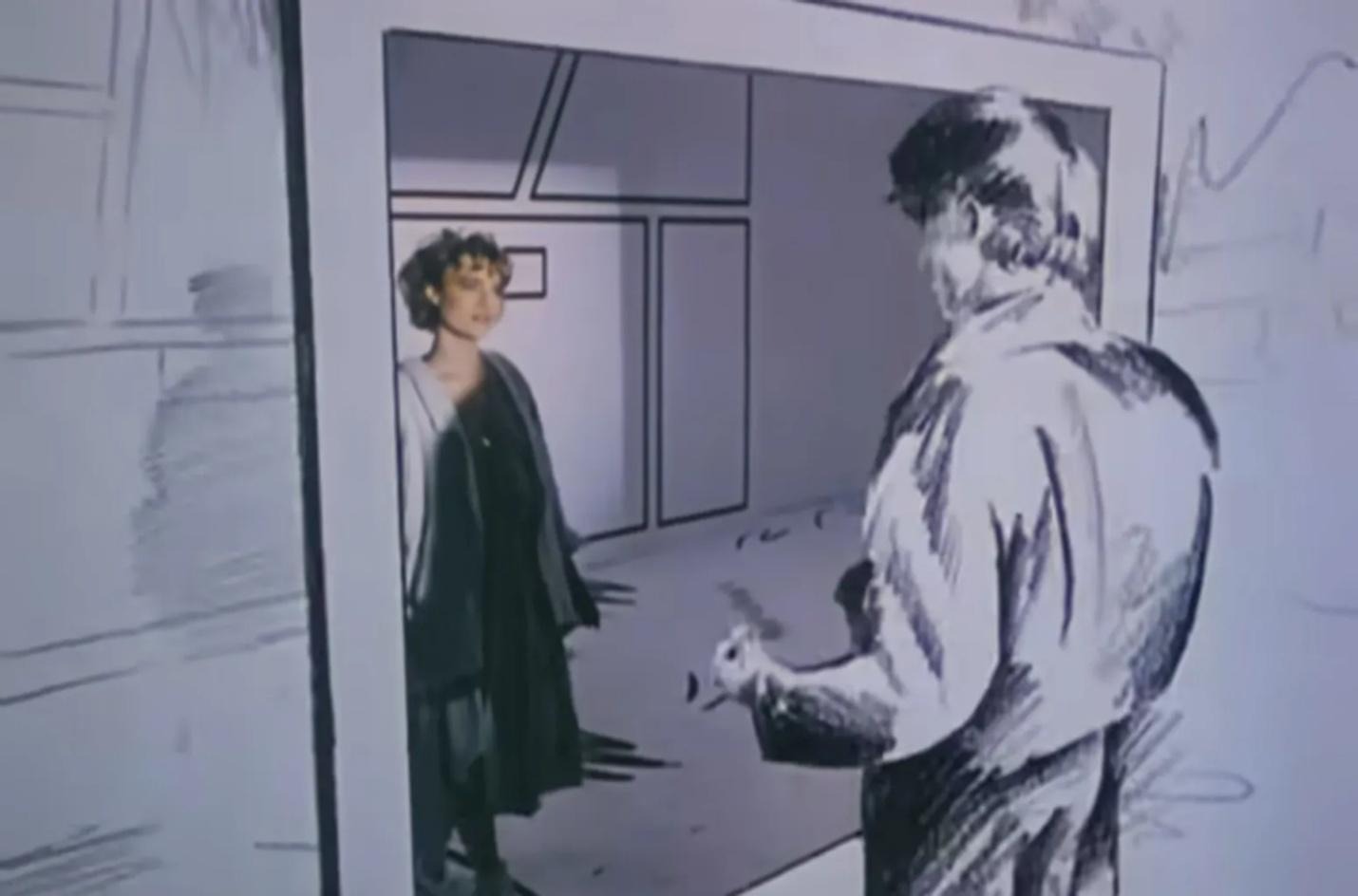
The Take On Me video is a perfect example of what it means to hone your craft—creatively, technically, and with discipline. While the song itself was powered by the revolutionary DX7 synthesizer, the video became iconic not just for its catchy hook, but for how it pushed the boundaries of visual storytelling.
The concept was ambitious: to bring a graphic novel to life by blending hand-drawn animation with live-action footage. To achieve this, the creators used a technique called rotoscoping, which involved tracing over individual video frames by hand—frame by frame, drawing by drawing. The result was an animated world that seamlessly merged fantasy and reality, where the characters literally broke through the page.
It’s said that over 30,000 hand-drawn frames were created to animate singer Morten Harket and breathe life into the video. It wasn’t fast, and it certainly wasn't easy—but it was iconic. It reminds us that behind every “magical” experience is often an immense amount of craft, care, and human effort.
Craft and technology have always coexisted.
The best innovations augment human creativity - they don't replace it.
The Future of Supply Chain as Living Ecosystems
This brings us to supply chain planning today.
What was once a craft shaped by deep expertise, judgment, and collaboration is now increasingly seen as something to be automated, standardized, and solved through advanced technology.
Is that the right direction?
I believe the human will always play an essential role—the human with the machine.
Modern supply chains no longer resemble the linear, rigid, mechanical systems of the past. They function more like living, adaptive ecosystems—interconnected, constantly evolving, and responsive to change.
Like living organisms, supply chains can be described as autopoietic—a term from biology meaning self-creating and self-sustaining. They don't merely execute preset instructions, they self-organize, learn through continuous interaction, and dynamically reshape themselves in response to both their internal environment and external stimuli.
Navigating these systems demands more than rigid rules. It requires:
- Growing knowledge amid uncertainty
- Embracing improvisation in ambiguity
- Cultivating trust in emergent patterns that can’t be fully predicted—but must be sensed and responded to.
Cognition, Play, and Culture: Invisible Threads
This mirrors the Tree of Knowledge framework where living systems grow through three interwoven dimensions:
● Cognition – perception, adaptation, sense-making
The ability to perceive and interpret complex information, enabling planners and technologies to learn, spot patterns, anticipate disruptions, and adapt.
● Play – exploration, experimentation, emergence
The space for experimentation and discovery, allowing creative scenario testing and innovation without fear of failure.
● Culture – transmission, memory, shared norms
The shared values and collaborative behaviors that build trust foster communication, and enable collective problem-solving beyond individual efforts.
Orchestrating the Future of Decision-Making
Cognition, play, and culture are three pillars of intelligence in the natural world that offer deep insight for building adaptive systems. Together, these dynamics build a knowledge ecosystem— intelligent, curious, and evolving — and provide a powerful blueprint for designing better supply chain decision making.
This perspective invites us to rethink supply chain planning— as a broader orchestration layer that influences decision-making through a highly adaptive, self-reconfiguring network—helping companies shape and reimagine how decisions are made. One that continuously senses, learns, evolves, and understands not just what to change, but also how to change.
Through all this though – we need to ensure we continue to evolve the craft – one that thrives on informed human judgment, collaboration, and a continuous dialogue with data and the right context.
What if we stopped treating planners as mere tool operators and started recognizing them as creative decision-makers?
AI, much like the narrative tools of magical realism, offers a new dimension. Its power lies not in replacing planners, but in augmenting their imagination. To simulate possibilities. To tell richer stories about the future. To explore alternative paths.
But we must tread carefully. Just as Nobel-Prize winning legendary stories cannot be reduced to CGI, the planner’s role cannot be reduced to a set of automated suggestions. When we chase only speed or efficiency, we risk flattening the craft. And in doing so, we lose something deeply human: the ability to learn, to adapt, and to make meaningful decisions—along with understanding the consequences—in the face of complexity.
Today’s supply chains are complex adaptive systems: shaped by history, constrained by legacy tools, and often driven by repeating patterns. Even with the latest technologies, organizations often can fall into familiar traps, mistaking movement for progress, and automation for advancement.
Perhaps the real lesson isn’t to escape the complexity using clever, magical tools—but to embrace the possibility that lives within it. When we engage and embrace complexity, we create a space for insight, creativity, and better decision-making.
So, as we stand at the intersection of the latest emerging technologies and global supply chains, let’s not forget the root of the word technology: techne—the craft. And let’s focus on building a better future for the craft of the supply chain.
And yes, to be read while rewinding Take on Me. Again. And again. Until the image flickers just enough to feel like a little bit of magic.
And if that’s not your jam—or your generation—well… there’s always the energy drink monkey.
References:
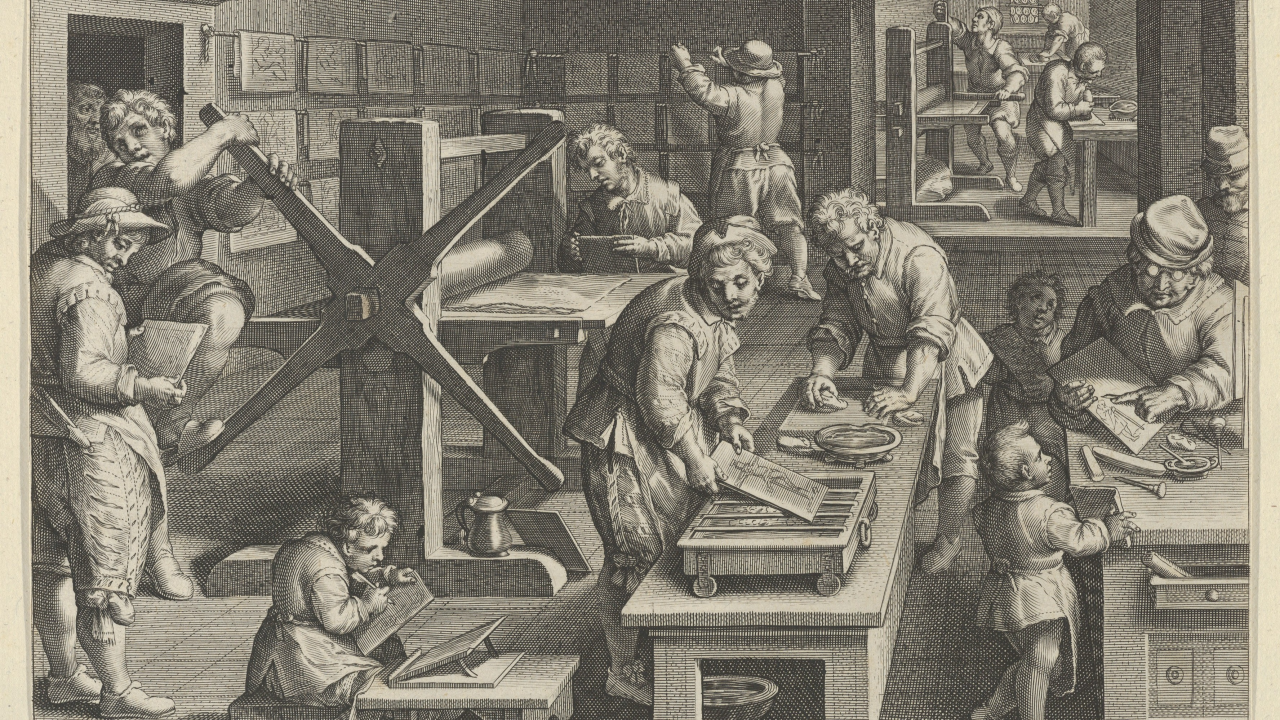
Image: The Invention of Copper Engraving, from Nova Reperta, ca. 1600. Jan Collaert I after Stradanus. Courtesy of The Metropolitan Museum of Art.
MacInnes, T. (2021, December 18). KTOM: The Top 500 Songs in Modern Music History—Song #306: Take On Me by a‑ha. Tom MacInnes, Writer. https://tommacinneswriter.com/2021/12/18/ktom-the-top-500-songs-in-modern-music-history-song-306-take-on-me-by-a-ha/
Heaven, Will Douglas. “How AI Can Help Supercharge Creativity.” MIT Technology Review, May/June 2025 issue (Print Edition)

Sign up for ideas worth revisiting.
Stay connected with updates on our projects, process, and what we’re learning along the way.
TABLE OF CONTENT