

- What We Do

- who we help
- What We Do
- Who we help
How Islands of Coherence Can Shape Your Supply Chain
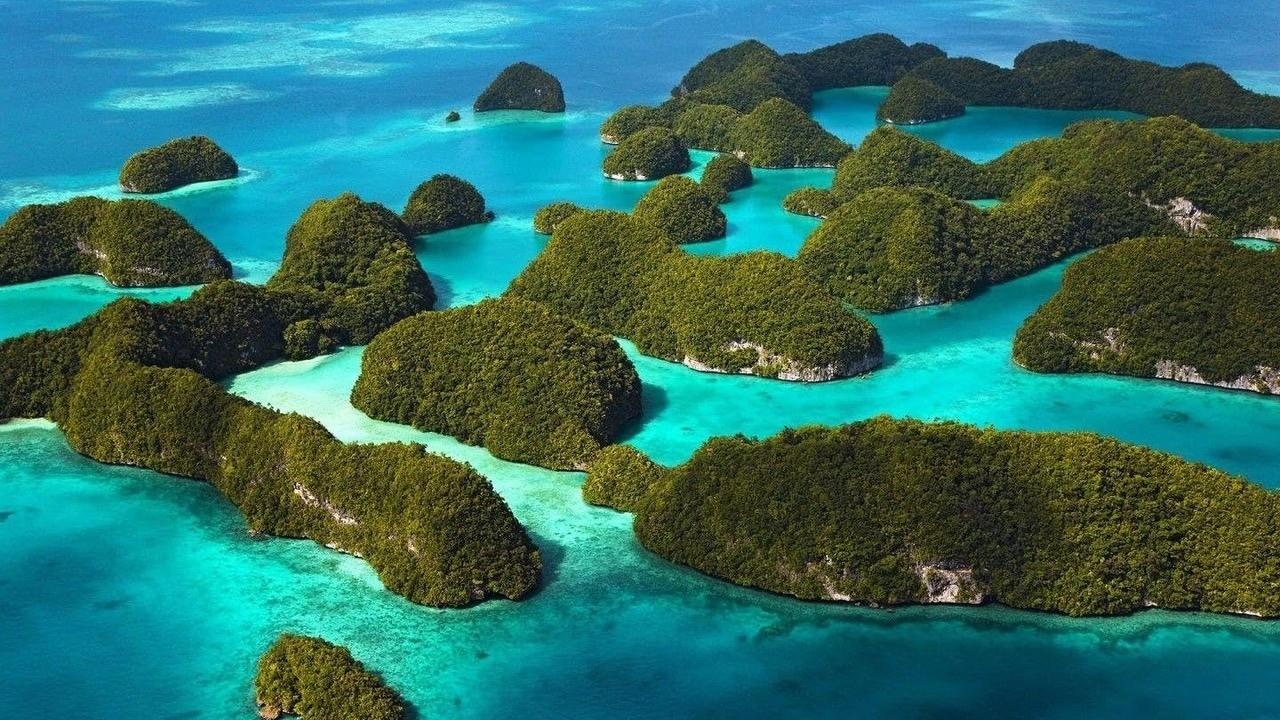
“When a complex system is far from equilibrium, small islands of coherence in a sea of chaos have the capacity to shift the entire system to a higher order.”
– Ilya Prigogine, Nobel Prize-winning Chemist
The supply chain industry has no shortage of commentary on systems thinking and complexity. Most conflate the vocabulary with the understanding.
I think it is really important to help companies think outside of the traditional supply chain box and to be able to answer, “how do supply chains really embrace uncertainty and thrive in a complex world?”
I spent the past year immersing myself in an apprenticeship program and learning about complexity theory. This has shaped my own thinking and helped me to think about how we can help evolve and push the supply chain craft forward.
The core assumption of classical supply chain management — that resilience comes from tighter control is outdated. Resilience emerges from cultivating small pockets of order that gradually shift the system around them. Prigogine called these islands of coherence. This post is about what they are, why they matter, and what it means for how we build supply chains.
Origins of the Term
The term "islands of coherence" is attributed to Ilya Prigogine, a Nobel Prize-winning chemist known for his work on dissipative structures and complex systems. The core idea is that within complex systems, small pockets of order and stability can emerge and influence the larger system's behavior. Prigogine proposed that "when a complex system is far from equilibrium, small islands of coherence in a sea of chaos have the capacity to shift the entire system to a higher order". This concept, initially rooted in the study of physical and chemical systems, has since traveled far beyond the laboratory into ecology, social change, organizational design, and I would argue, into the supply chain.
In the context of modern supply chains, which are increasingly vulnerable to economic fluctuations, geopolitical risks, and disruptions, "islands of coherence" represent a strategic approach to building resilience.
Instead of attempting to control every aspect of a vast, complex, and dynamic global supply chain network, companies focus on creating zones of stability and reliability within their operations. These islands can then serve as anchors that can influence and transform the wider system over time.
What Are Islands of Coherence?
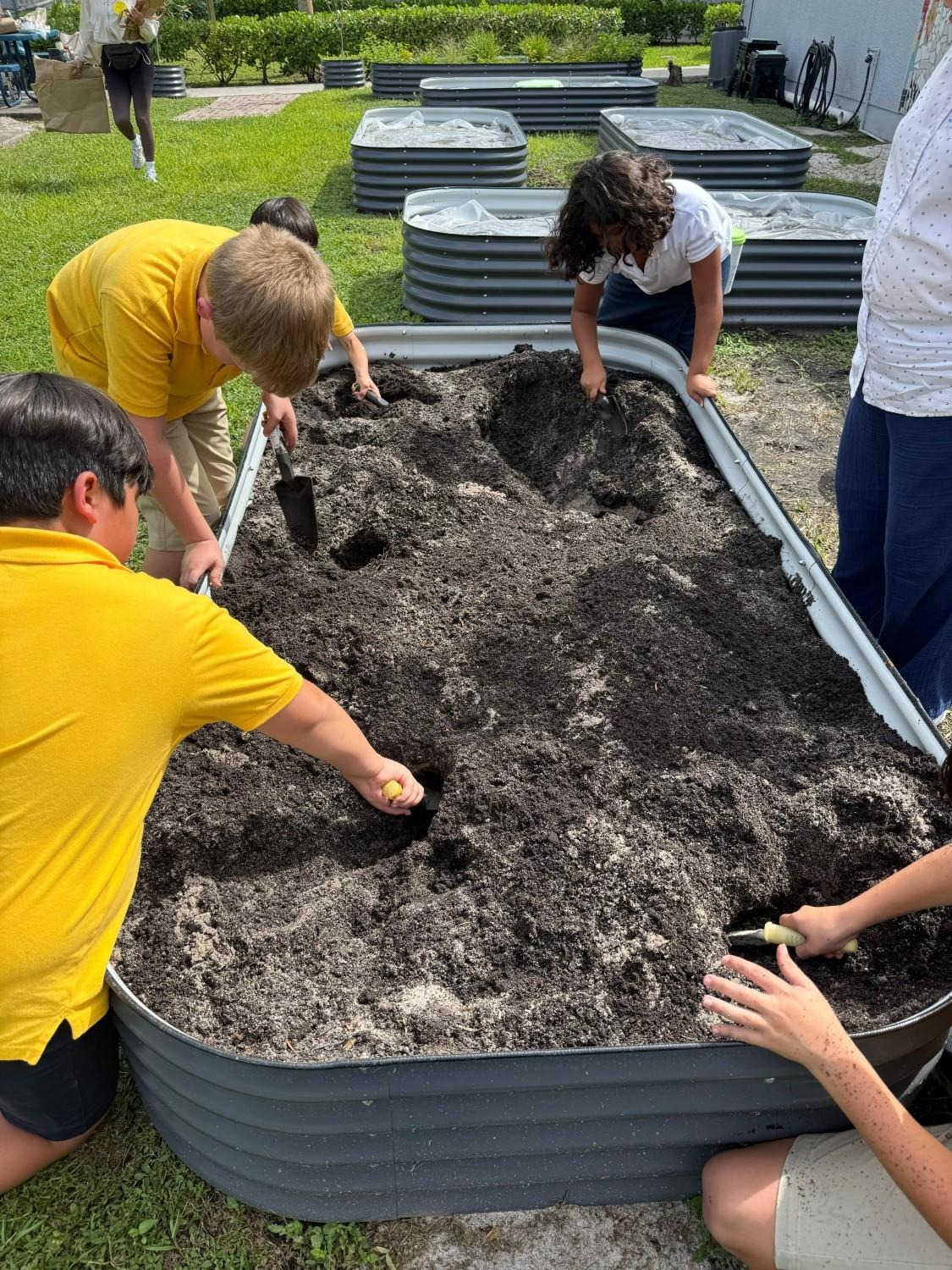
At its simplest, an island of coherence is a space where people come together with a shared intention to create something meaningful and positive. These spaces can be physical, like a community garden, or they can be intangible, like a shared vision for a better future or a commitment to mindful living. They represent areas of stability, purpose, and interconnectedness amidst the turbulence of the wider world.
Consider a garden. A well-tended plot doesn’t control the rain or command the soil to produce. It shapes conditions — the right seeds, the right spacing, the right drainage — and then allows growth to emerge. Each bed has its own character, adapted to its light and soil, yet the whole garden moves together through the seasons. The gardener’s job is not to manage every leaf. It is to cultivate the conditions where coherence can arise naturally.
The question for supply chain leaders is: where are your islands? And more importantly: are you deliberately cultivating them, or leaving coherence to chance?
The Galapagos Principle
To understand why islands matter, it helps to think about how diversity and resilience emerge in nature.
A population of finches, separated by the distances between the Galápagos islands, started from common ancestry. But each island imposed different conditions — different food sources, different climates, different pressures. Over time, the beaks adapted. What emerged was not uniformity but coherent diversity: species distinct enough to occupy different niches, yet related enough to recognize a common origin. The same principle holds for sea turtles — leatherbacks, green turtles, hawksbills — each shaped by the specific constraints of their oceanic and nesting environments, developing unique strengths to survive.
In both cases, the islands acted as enabling constraints — boundaries that didn’t limit evolution but invited it. Isolation, climate, and geography created conditions for diverse adaptation and resilience. The same is true in complex systems and supply chains: resilience doesn’t emerge from uniform control but from coherent diversity evolving within well-shaped boundaries — our modern “islands of coherence” in a shifting sea.
Constraints Are Not Bottlenecks
Islands of coherence also serve another purpose which is to enable constraints. In classical supply-chain theory, people think of constraints in the terms of Goldrut’s theory of constraints as limitations on flow or capacity – so things that restrict throughput, efficiency, or optimization. Most supply chain practitioners typically think of constraints as bottlenecks that need to be removed to improve flow.
In complexity theory, constraints are not bottlenecks, they are defining features of the system. They determine what kinds of behaviors are possible, what patterns can emerge, what the system is capable of becoming; rather than how much output you can get.
And this is something that can be hard to wrap around one’s head especially for supply chain operators….. constraints are boundaries to be understood, tuned, and sometimes created because they give the system its shape, coherence, and capacity to evolve.
You can think of these as levers to shape new patterns, behaviors, or structures that arise unexpectedly due to the interactions among the system’s elements.
So instead of asking “what constraint can I remove?”, the right question is “what constraints should I design, tune, or create?” Because constraints give a system its shape, its coherence, and its capacity to evolve.
An example I like to use is looking at the differences between a seawall and a mangrove forest. A seawall is a rigid barrier that is built along coastal shorelines to protect homes during a storm. Yet, a seawall is also brittle and fragile… it helps to reduce damage from strong seas but it is unable to learn, adapt and grow stronger, and thrive with each subsequent storm. It keeps the sea out effectively, right up until the day the design conditions are exceeded. A mangrove forest is different. Its tangled root systems slow wave energy, trap sediment, and flex under pressure. It doesn’t keep the sea out — it absorbs it. In a major storm, a mangrove forest bends and largely survives. The seawall holds until it doesn’t, then fails all at once.
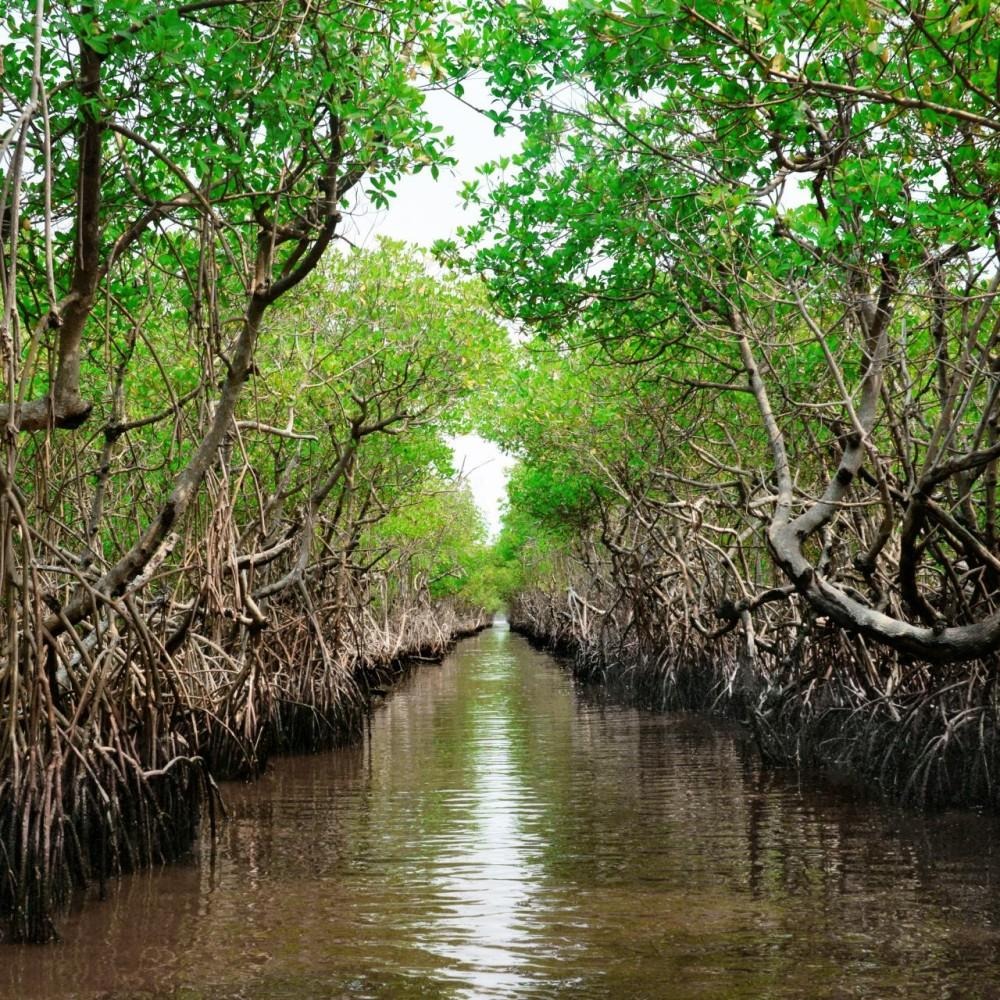
Most supply chain management is built on seawall logic. Islands of coherence are mangrove forest logic. Mangrove forests are significantly more effective than seawalls not in spite of their lack of rigid structure, but because of it.
In complexity theory, these are called enabling constraints, and they behave very differently from the governing constraints that dominate classical supply chain design.
Enabling constraints are restrictions or boundaries that, paradoxically, generate rather than limit possibility — they channel a system toward productive behavior rather than suppress it. The core idea: unconstrained systems tend toward chaos or frozen equilibrium. The right constraints keep a system operating at "the edge of chaos," where emergence, adaptation, and novel order can arise.
- Gradients: differences in context, pressure, and resources that orient system behavior without dictating specific paths. Every supply chain node operates working with real local on the-ground variables and processes: a regional highway closure, a spike in order corrections, a local bank holiday. These are all real variables driving local behavior.
- Permeable boundaries: the edges of your network where signals flow both ways. Vendor-Managed Inventory (VMI) is a good example: the supplier gets visibility into the retailer's inventory data (normally guarded), and in exchange takes on replenishment decisions. Information and decision rights flow across the organizational boundary — but selectively, governed by contract terms.
- Selection pressures: are the conditions that force adaptation. Tariffs, lead times, raw material variation, customer behavior, and weather conditions can sometimes be influenced, but often fall outside our control. These conditions are real pressures that help evaluate performance under real world conditions.
- Protected experimental spaces: zones where new approaches can be tested without putting the whole system at risk. Different from a standard pilot, which is designed to succeed and then scale, it is designed to learn — even if it fails.
Classical supply chain management tends to do the opposite — seeking to impose uniformity across the network, eliminating gradients, and suppressing the variation that makes adaptation possible.
The question for supply chain leaders is not how to eliminate risk and complexity, it is how to shape it. Design the right constraints, and the system develops its own capacity to adapt. That is what islands of coherence actually build: not stability against disruption, but the capability to evolve through it.

Sign up for ideas worth revisiting.
Stay connected with updates on our projects, process, and what we’re learning along the way.
TABLE OF CONTENT