


- What We Do

- who we help
- What We Do
- Who we help


Why Technology Alone Doesn’t Improve Supply Chains
Supply chains operate across functions, regions, business roles, systems, and partners. New technology can help, but it does not automatically create better outcomes.





Areas of Strategic Focus
Advisory focused on connecting decisions across the organization, so strategy, technology, and operations move in the same direction.
Technology Selection & Evaluation
Choosing the right planning technology to support where your maturity needs to go next.
- Evaluating your current supply chain technology landscape and building the business case
- Defining selection criteria and best practices for vendor selection
- Developing RFIs/RFPs and creating vendor short lists based on your needs

Technology Trends & Innovation
Making sense of where technology is headed and how it will impact the supply chain
- Key trends, emerging technologies, and vendor innovations shaping digital supply chain planning
- How emerging capabilities should inform your roadmap and support scalable AI adoption
- How planning technology can help shape more effective future planning processes
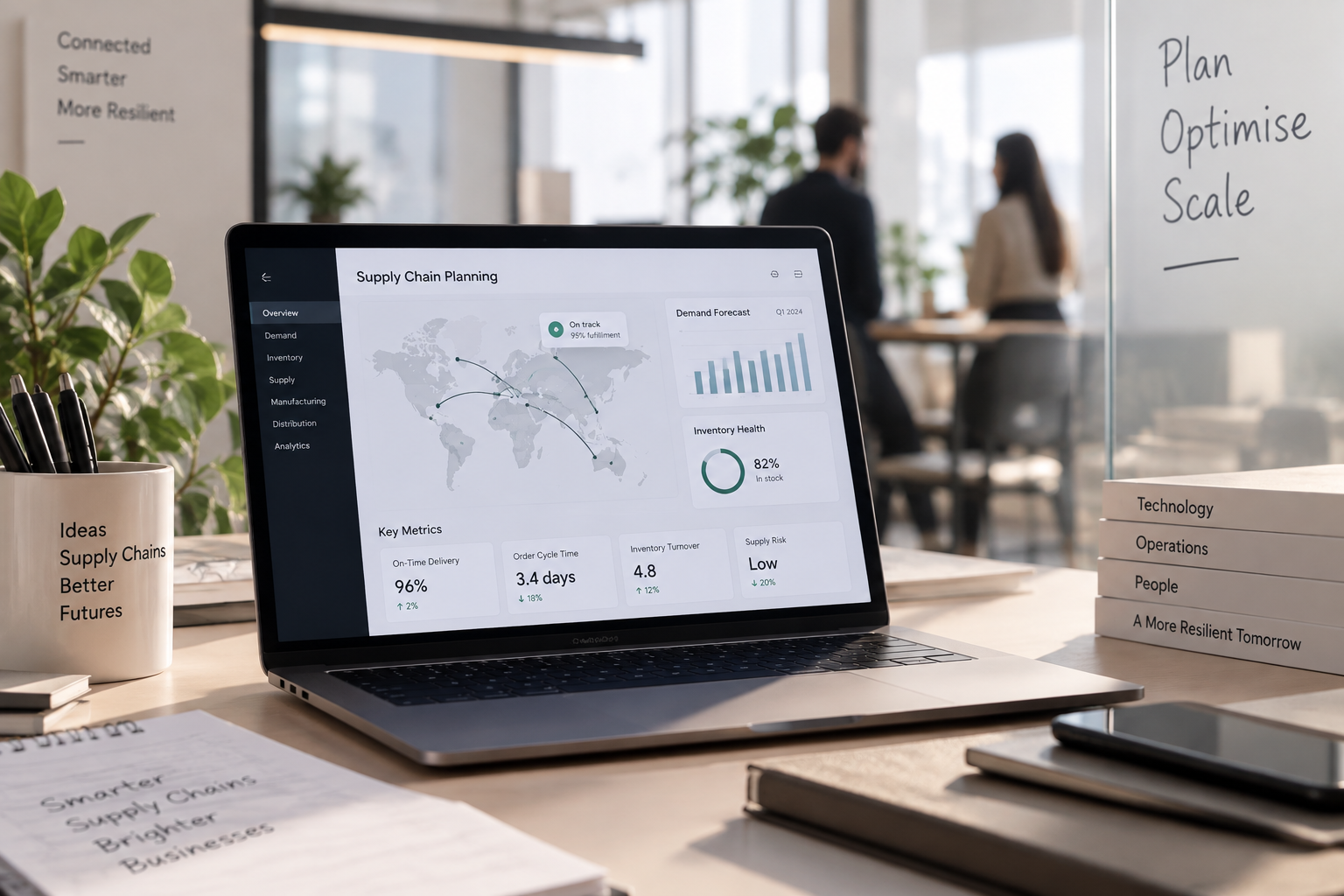
Implementation & Business Transformation
Turning a technology decision into adopted, working change that drives value.
- How can you best deploy supply chain planning technology
- Change management and adoption
- How to measure, elevate performance, and realize durable value
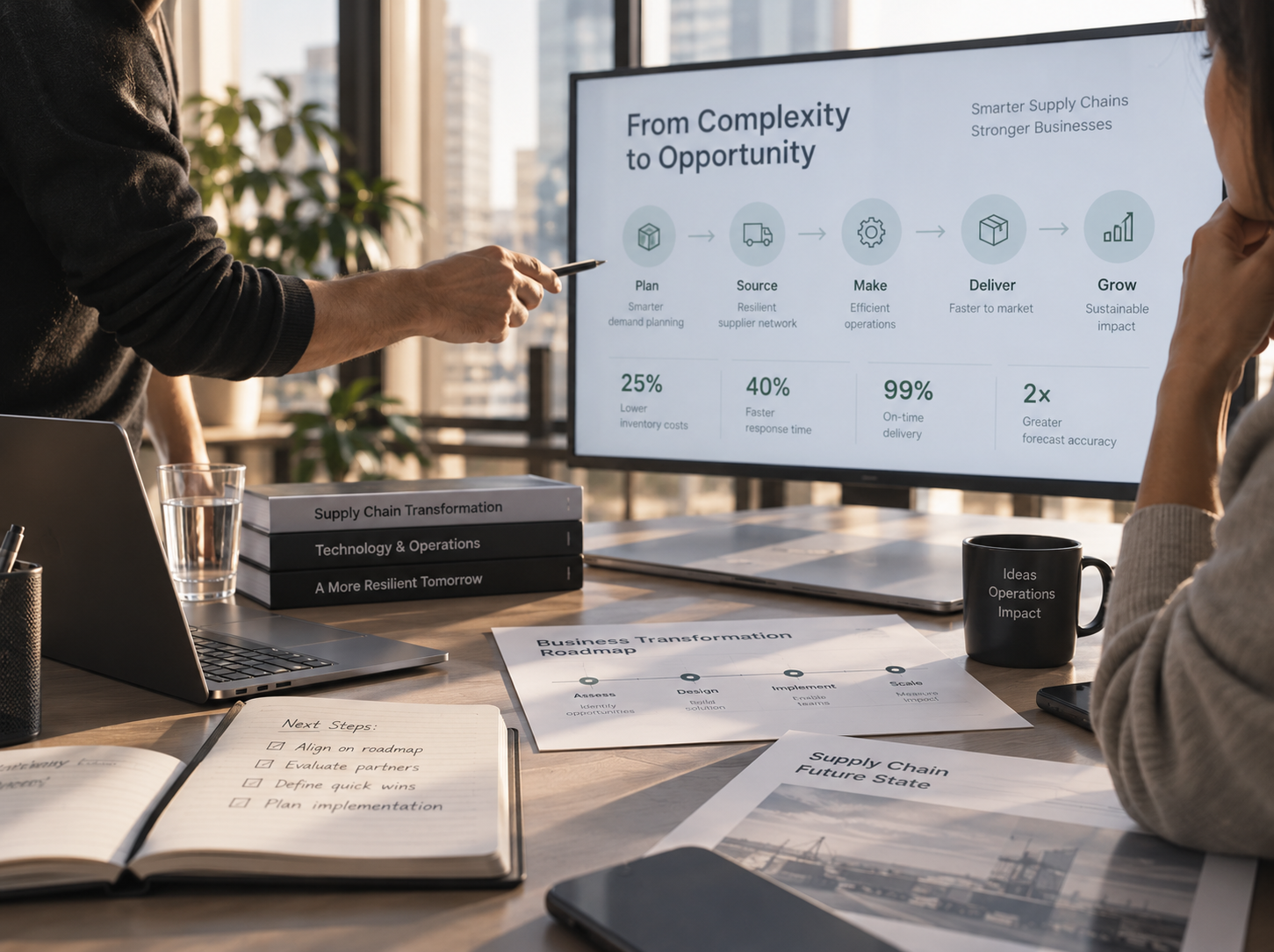
Roadmap and Transformation Sequencing
Designing roadmaps that solve today's critical operational challenges while building toward where the business is headed.
- Prioritizing initiatives across near, mid, and long-term horizons
- Aligning investment with business objectives
- Managing trade-offs across a multi-year transformation

A View from Inside the Market
Supply chain planning leaders are operating in a market of constant uncertainty and volatility — compounded by a wave of new technology, AI chief among it, moving faster than most organizations can absorb it.
Complexity, disruption, and uncertainty have become the new operating reality for supply chains. Yet much of the technology supporting supply chain decision-making remains fragmented, reactive, and rooted in decades-old architectures.
As business accelerates and technology outpaces the ability to adapt, organizations continue to pour investment into planning. Yet despite these efforts, supply chain leaders still struggle to build plans that actually keep execution aligned with strategy.
The new environment requires planning leaders to refocus from outdated planning paradigms back to the core planning purpose: enabling better decisions.
That means rethinking how the decision actually gets made — how data, technology, and human judgment work together, rather than treating each as a separate system to manage.
The companies that will lead aren't the ones automating what they already do. They're the ones building planning capability for a world that keeps moving — not the one they planned for two years ago.

Let’s talk.
A focused session to step back and understand the situation.
- Structured discussion around your current context
- Clarity on the problem beneath the surface
- Shared view on whether and how to move forward
Frequently Asked Questions
What types of organizations do you typically work with?

We work with organizations operating complex, global supply chains — across manufacturing, retail, CPG, and distribution — where supply chain management consulting and technology strategy intersect.
Who typically engages with Alchemy Advisory within an organization?
We work closely with senior leadership responsible for supply chain and technology — typically C-suite leaders evaluating decisions across planning, supply chain strategy consulting, and long-term operational direction.
When do organizations typically seek advisory support?
Usually at pivotal decision points — defining long-term technology strategy, evaluating platforms, modernizing planning capabilities, or aligning investments with business priorities. These are moments where decisions have lasting operational and financial implications.
How does Alchemy Advisory support enterprise technology decisions?
We provide an independent advisory services perspective to help leadership teams evaluate choices, define priorities, and structure their approach to supply chain technology consulting and planning. The focus is not on implementation — but on improving how decisions are made, so investments translate into long-term performance and resilience.
What makes your approach different?
The focus is not on execution, but on decision quality. We work as an independent lens — bringing structure, perspective, and challenge to how leadership teams think through complex enterprise software strategy and business strategy consulting choices.