


- What We Do

- who we help
- What We Do
- Who we help
Mango Season, Supply Chains, and Why We Need to Experiment More
You can see the link here: https://www.linkedin.com/pulse/mango-season-supply-chains-why-we-need-experiment-more-alex-pradhan-6tese/
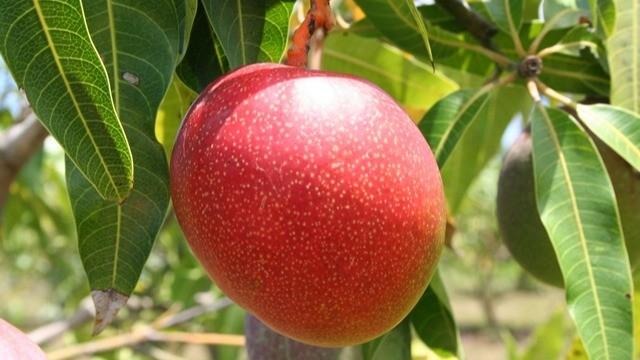
It’s mango season in South Florida. It’s that time of year from May to August when my hometown, Miami, practically bursts with fruit. In my neighborhood, nearly every backyard has at least one (or three) mango trees. The harvests are typically so bountiful that giving away mangoes becomes a seasonal tradition —neighbors, coworkers, teachers, even the Amazon driver get a share.
But what seems like a seasonal treat today has roots in something far more complex.
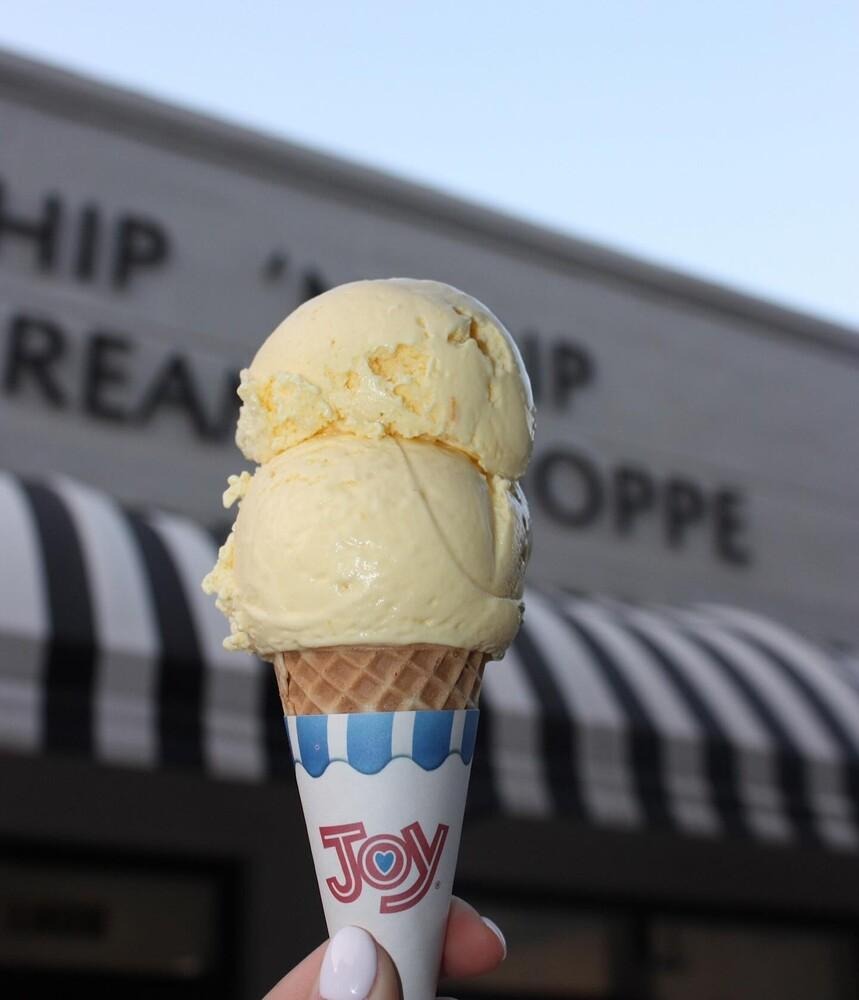
A Community That Once Lived by the Mango
Over 100 years ago, my neighborhood wasn’t suburban—it was farmland. Families depended on the mango harvest for survival. If they didn’t get the conditions right—if the water, soil, or sun were off—it meant a bad season. So they tested, experimented, adapted.
That mindset echoed in a recent Gartner Supply Chain Symposium session on experiment-driven planning, led by Jan Snoeckx, Director Analyst at Gartner. He compared supply chain planning to tomato farming—where growers constantly test seed varieties, soil conditions, and fertilizers to learn what works.
Like farmers, supply chain leaders must experiment—not just plan.
Why Experimentation Matters More Than Ever
Too often, companies approach planning as if everything is stable—building linear models, embedding rigid assumptions, and hoping a few scenarios will cover the complexity they face.
Spoiler alert: they don’t.
Here’s the shift: Planning shouldn’t be a search for the “right” answer. It should be about about continuous learning and increasing our knowledge of the supply chain - especially assessing how the supply chain copes with different types of uncertainty. This helps to understand where value can be gained amidst uncertainty.
That’s the heart of experiment-driven planning. By working with variables instead of fixed assumptions, we can simulate tens of thousands of possibilities. This approach frees us from design constraints and allows us to explore what’s truly possible.
It helps us:
- To better understand what drives performance
- To expose where we’re vulnerable
- To provide insights into outcomes and likelihoods
- To uncover where our assumptions are weakest
- And to gain knowledge—deep knowledge—of how our supply chains truly work
The best planning teams aren’t just predicting—they’re cultivating insight. Because you can’t control what you don’t understand.
What Mangos Teach Us About Learning Through Experimentation
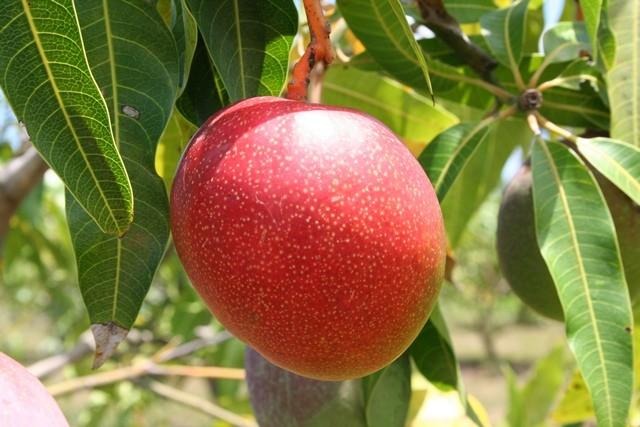
Backyard mango trees are a luxury today, but they’re a legacy of a region that once lived by them. Growers had to try new cultivars, monitor rainfall, test soil, and adapt to pests. Experimentation wasn’t optional—it was crucial.
And it led to breakthroughs. One of the most famous? The Haden mango.
In 1910, a backyard experiment in Coconut Grove, a neighborhood in Miami, crossed a fibrous Caribbean variety (‘Turpentine’) with a silky Indian one (‘Mulgoba’). The result? A vibrant, flavorful, disease-resistant mango named Haden— which quickly dominated Florida’s fledgling mango industry and laid the genetic foundation for nearly every major commercial variety grown in the Western Hemisphere.
The lesson?
Like farmers, supply chain leaders can do more than survive uncertainty —they can thrive in it. Even in highly unpredictable environments, experimentation can lead to breakthroughs that that create entirely new forms of value.
Applying the Farmer’s Mindset to Supply Chain
Supply chains behave less like linear flows and more like complex, interconnected systems responding to a mix of internal and external forces. Many of these—like weather conditions, tariffs, customer behavior, lead times, and raw material variation—can sometimes be influenced, but often fall outside our control.
But just like farmers, we can experiment across a range of areas to:
- Simulate changes to demand and supply parameters
- Test policy shifts (like safety stock levels)
- Test tradeoffs between speed and accuracy to understand decision response times
- Evaluate performance under stress
- Understand how operating conditions like raw material variation can impact production
This isn’t about “planning harder.” It’s about planning smarter. New emerging approaches like experiment-driven planning are poised to reshape how we uncover insights, far beyond what traditional methods delivered.
Why Scenario Planning Is No Longer a Ripe Solution (Pun Intended)
Historically, scenario planning has been the go-to tool for the S&OP process. Build a handful of what-if scenarios, adjust assumptions, pick the best-case.
But here’s the issue: the world has changed (and continues to rapidly change). Today’s complexity has outgrown yesterday’s models.
Traditional scenario planning relies on discrete, manually created assumptions—each one requiring time, effort, and often biased judgment. Even the best teams rarely create more than a dozen or so scenarios within a timely manner.
Worse, these scenarios often lack advanced automation, are often siloed at one planning level, and can be disconnected from the broader supply chain dynamics. And they tend to reinforce existing supply chain decision assumptions, rather than challenge them.
In most cases, scenario planning avoids uncertainty. Experimentation embraces and learns from it.
So, while scenarios will always have a place in the planning toolkit, they’re no longer enough on their own. In a world of mangoes—and global markets—ripening on their own unpredictable timelines, we need systems that learn as they go.
A Quiet Lab with a Loud Lesson
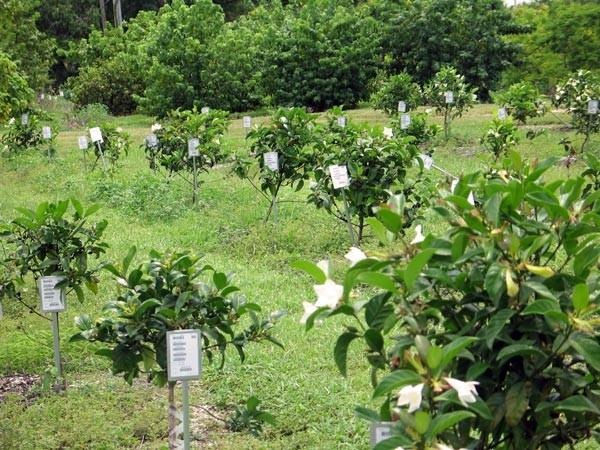
Every day this summer, while driving my kids to summer camp, I’ve driven past a place I used to barely notice—the United States Department of Agriculture (USDA) Subtropical Horticulture Research Station at Chapman Field.
Since 1923, it’s been one of eight USDA Plant Introduction Stations across the U.S., each located in a different climate zone and tasked with receiving and testing plant varieties from around the world. More than 22,000 accessions have come through the Miami station alone—mangoes, avocados, cacao, bamboo, palms, coffee, and more. But this isn’t just a botanical museum—it’s a living experiment. Scientists here actively evaluate traits like disease resistance, cold-hardiness, flavor, and ripening timing, and their work has directly shaped the varieties of fruit we eat today.
The scientists there are doing exactly what experiment-driven planning calls for: Understanding which variables matter and running enough trials to build resilience and quality into their outcomes.
They also lead research on pest prevention—like using sterilization and scent-based traps to combat fruit flies before they wreak havoc. That’s proactive risk management in action.
For supply chains, it’s a metaphor:
We need systems that can simulate, identify risk early, intervene, and protect the integrity of our 'harvest’.
A Final Thought: From Predictors to Cultivators
Next time you see a mango—on a tree, at a market, or on your kitchen counter—remember: it didn’t get there by accident. It’s the result of experimentation, observation, and careful cultivation.
That’s exactly the mindset we need in today’s supply chains.
We don’t need to predict every disruption.
We need to prepare for them—by cultivating systems that learn, adapt, and grow stronger over time.
Whether it’s a mango farmer in 1920, a USDA scientist today, or a supply chain leader in 2025, the challenge remains the same:
Understand your environment. Embrace Uncertainty. Experiment relentlessly.
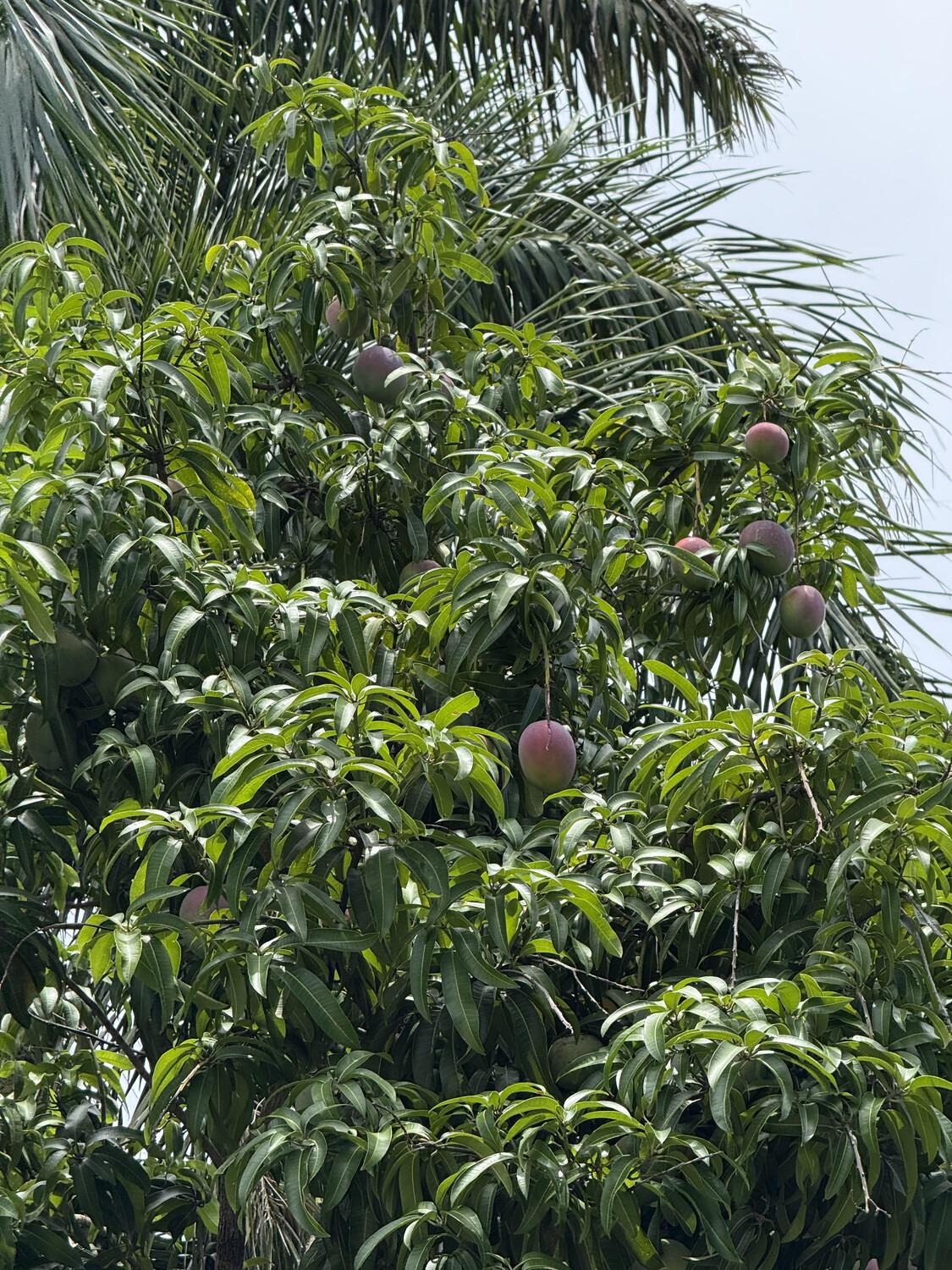
Author's note: If you’re curious to learn more about Chapman Field, you can visit here. The not-for-profit organization behind it was established in 1994 to support the research, education, and public outreach efforts of agriculture research service scientists at the station—historically known as “Chapman Field.”
Sources:
- USDA Agricultural Research Service – Chapman Field https://www.ars.usda.gov/southeast-area/miami-fl/subtropical-horticulture-research/
- National Mango Board – Mango Cultivation Practices: https://www.mango.org/ There’s also a great mini-series that dives deeper into the American Mango Story, if you're interested in more of the cultural and historical context.
- Fairchild Tropical Botanical Garden: https://fairchildgarden.org/visit/the-history-of-mangos-in-south-florida/

Sign up for ideas worth revisiting.
Stay connected with updates on our projects, process, and what we’re learning along the way.
TABLE OF CONTENT